Sensory Provision
Why do some children need sensory provision?
Many children struggle to manage their behaviour and emotions, especially if they have Social, Emotional and Mental Health (SEMH) difficulties. They often show inappropriate responses and feelings to situations which means can struggle to engage with learning and to cope in the mainstream classroom and have trouble in building and maintaining relationships with peers and adults. Children with SEMH difficulties will often feel anxious, scared and misunderstood.
What is a Sensory Diet?
We support our students with SEMH difficulties by providing a ‘sensory diet’. This helps children to manage processing dysfunction. It supports child in feeling calm and provides calming techniques that can be used during times of dysregulation which then allows them to attend, learn and behave to the best of their ability. It is an individually tailored program of sensory and physical based activities. It is used to manage a child’s sensory motor needs and reduce the impact any such disjunction may be having upon their attention and activity levels, behaviour and / or learning skill development.
Through the use of individual sensory diets, we aim to support children to:
- Develop their own individual regulation techniques
- Improve their focus and attention
- Manage their anxieties
- Engage more fully in learning tasks
- Develop positive mental health
- Manage their own behaviours
- Build positive relationships
- Identify and manage their own triggers
How do children access their Sensory Diets?
Children identified as needing a sensory diet are assessed using a sensory checklist provided by Beacon Behaviour Support. The aim of this is to help identify which senses may be impacted upon and why this might result in the child becoming dysregulated.
Each child then has a personalised plan of activities including movement and tactile experiences designed to meet their individual needs which is delivered at key times throughout the day. Each child's sensory diet is unique and based on specific sensory need.
Sensory activities may include things like jumping, on a trampoline, deep pressure activities, such as hugging a weighted blanket or rolling on a peanut ball, lights and calming sounds. Provision is structured in such a way as to provide the right amount of sensory input to help the child regulate their emotions.
Sensory Circuits
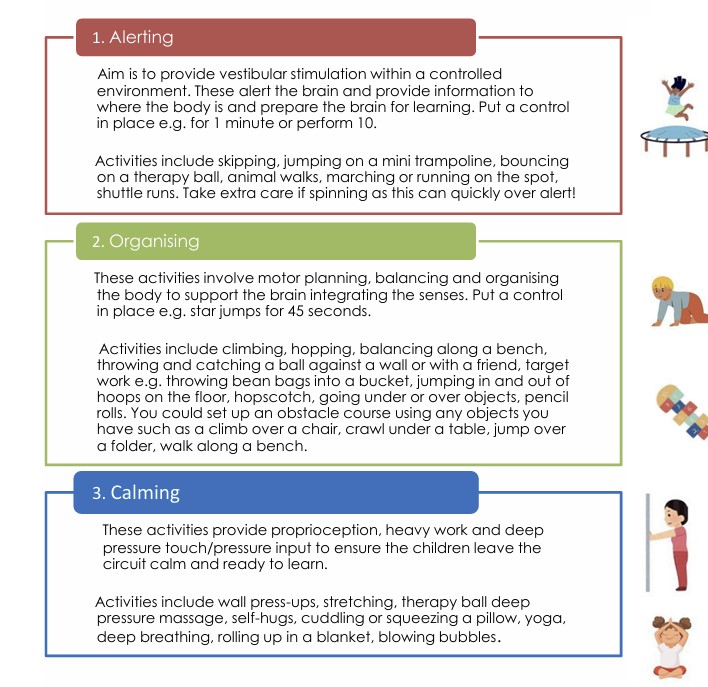
We also have a daily 'Sensory Circuits' club which takes place every morning before school. Sensory Circuits take the child through the stages of Alertness, Organisation and Calm and are ideal for children who struggle to transition from home to school or find it difficult to be ready to settle and be ready to learn at the start of the school day.